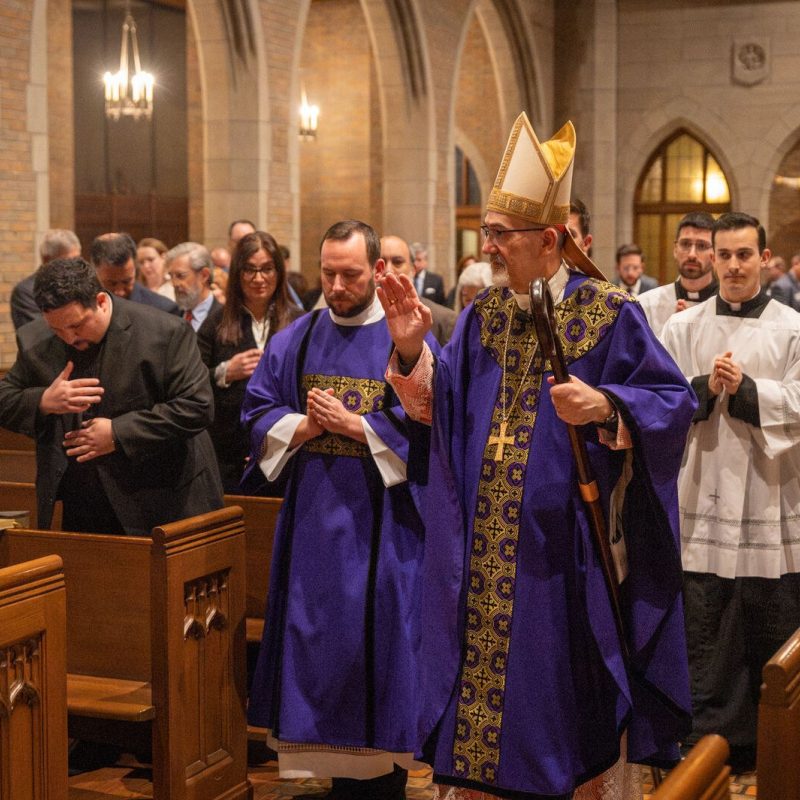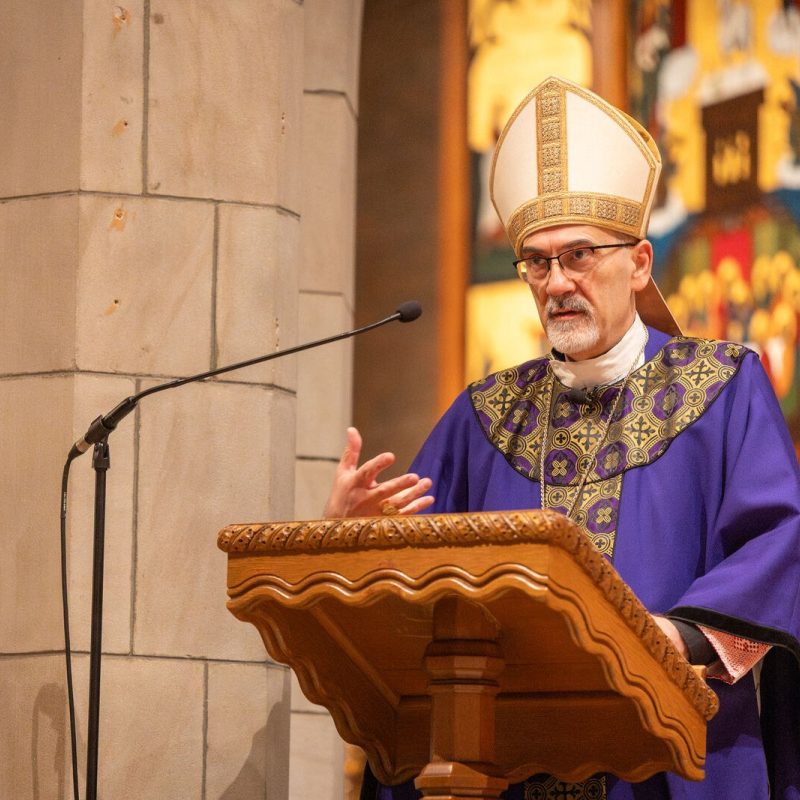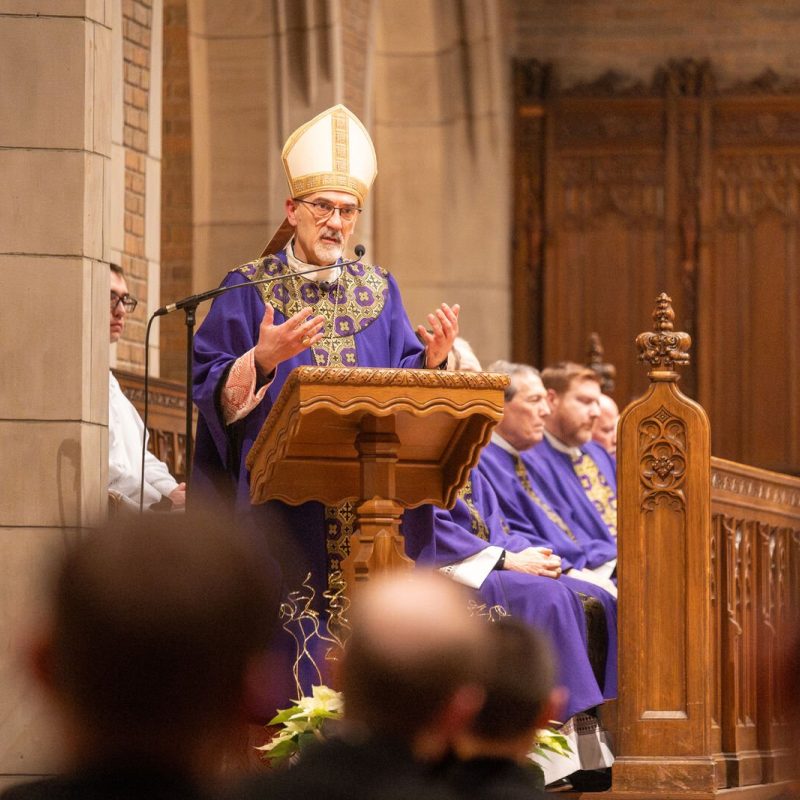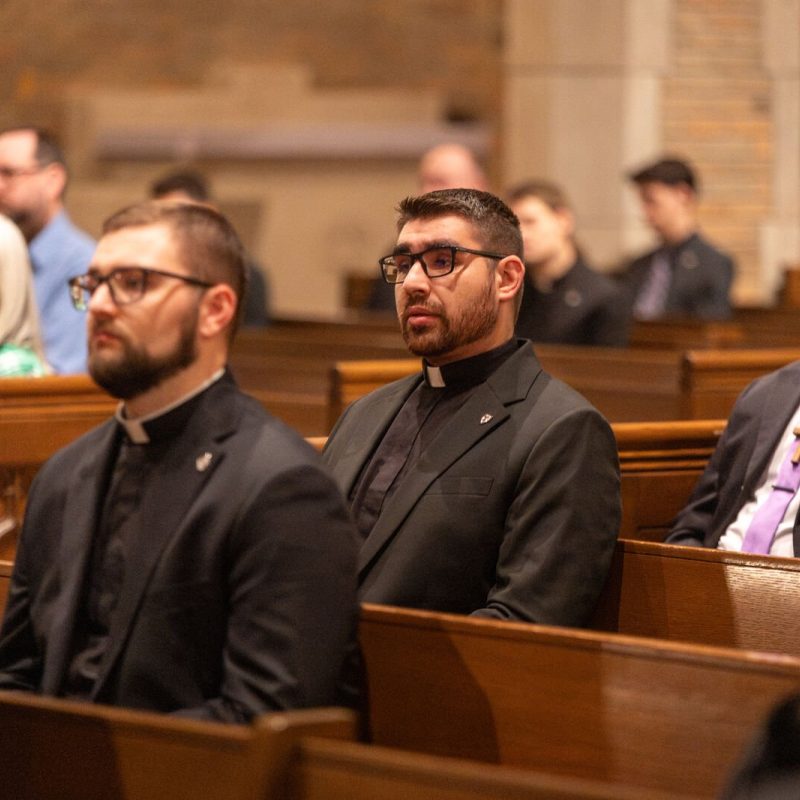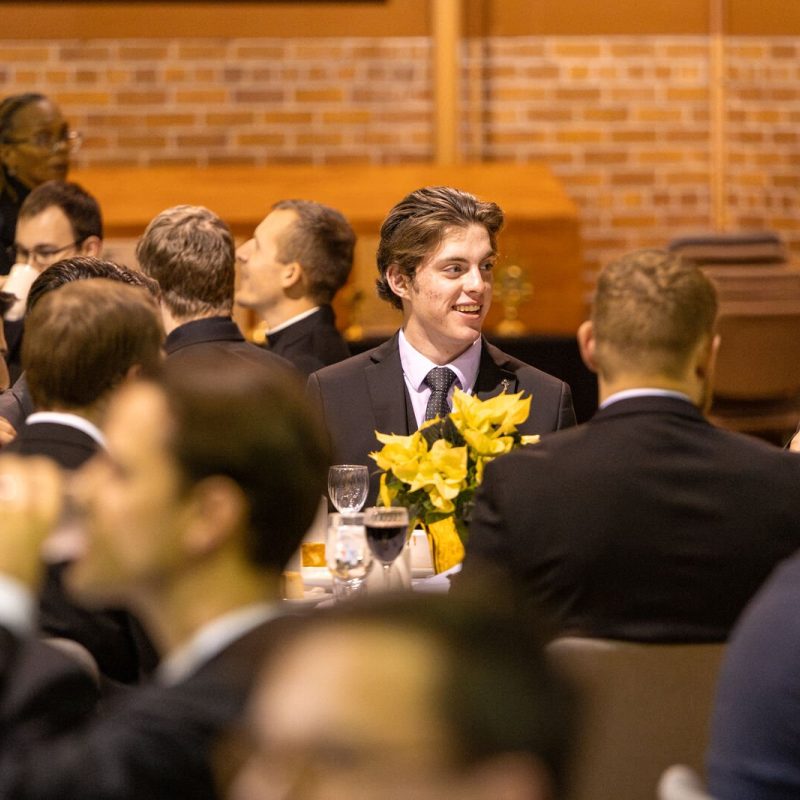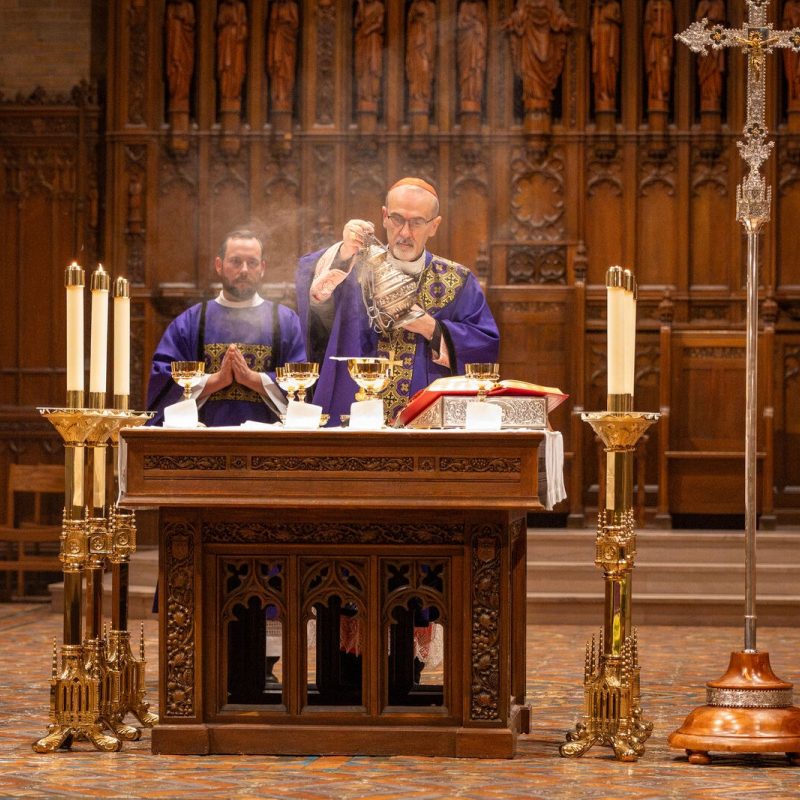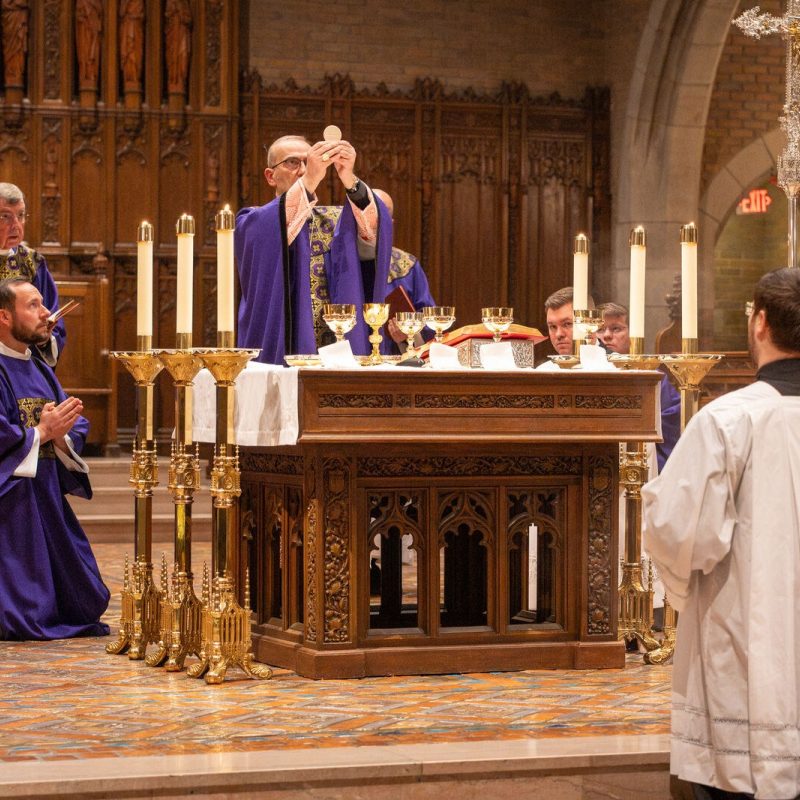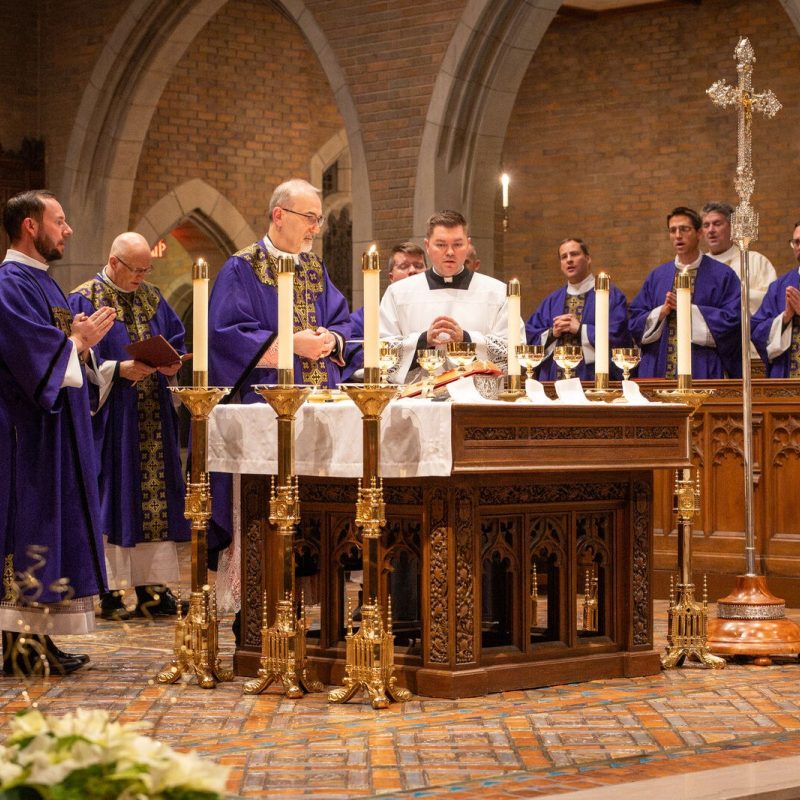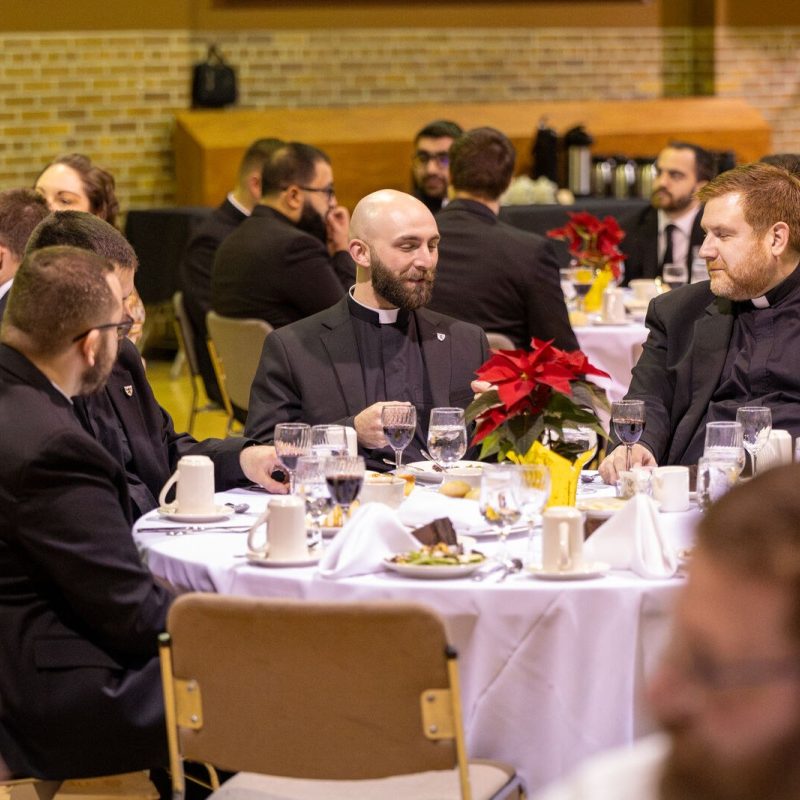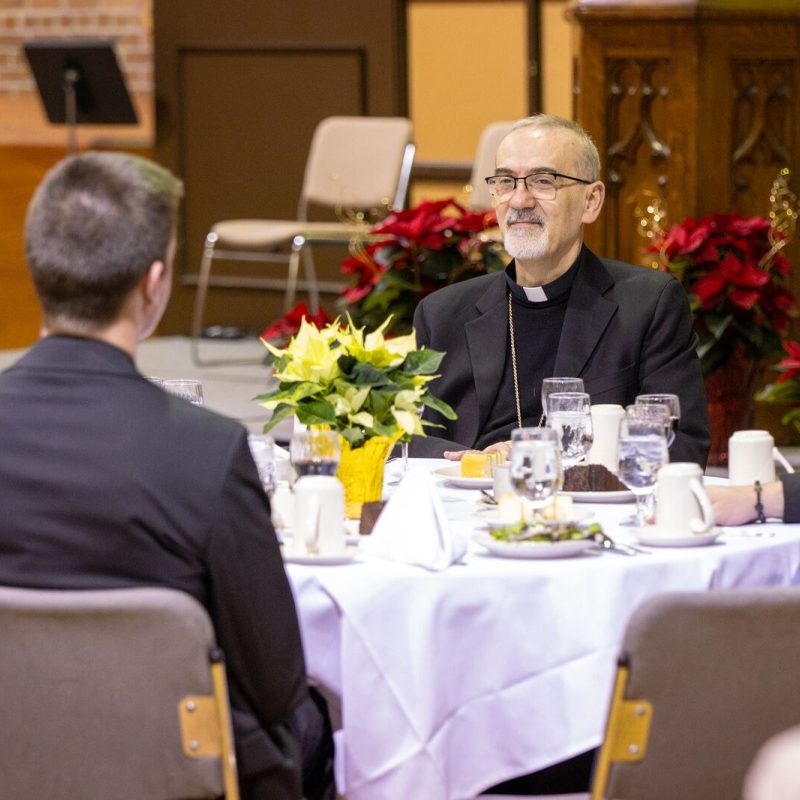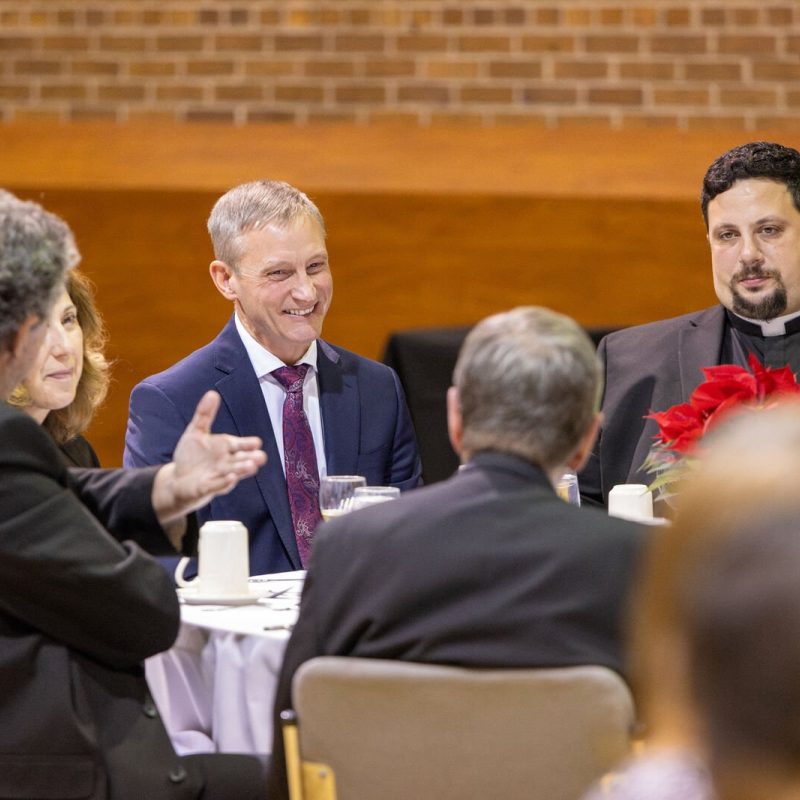
Seminarians, faculty, staff and supporters of Sacred Heart Major Seminary were blessed Dec. 6 to celebrate Mass and enjoy fellowship with Cardinal Pierbattista Pizzaballa, OFM, the Latin patriarch of Jerusalem and the Church’s representative of Christ in the place where the Lord was born, lived, died and rose.
The historic occasion came during Cardinal Pizzaballa’s four-day pastoral visit to southeast Michigan at the invitation of Detroit Archbishop Edward J. Weisenburger, which included several liturgies and meetings with Detroit-area Catholics and events to raise support for the suffering Church in the Holy Land.
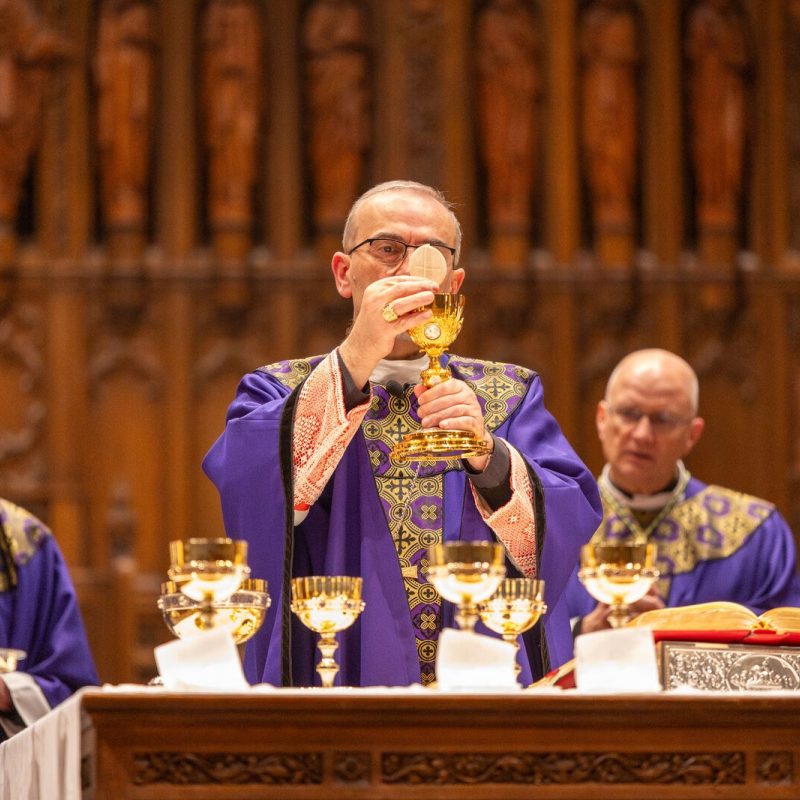
Celebrating a vigil Mass for the Second Sunday of Advent, Cardinal Pizzaballa thanked Archbishop Weisenburger, seminary rector Fr. Stephen Burr and others for the invitation to visit Sacred Heart, which he described as “the heart of your diocese.”
“This is where future priests are prepared, and as we know very well, priests don’t make up a community, but without priests, there is no community,” Cardinal Pizzaballa said. “God knows how important this is today more than ever.”
The patriarch said it’s critical for the Church to have “well-prepared priests motivated, full of joy and enthusiasm, and a good spirit of prayer and love for the Church and for the people.”
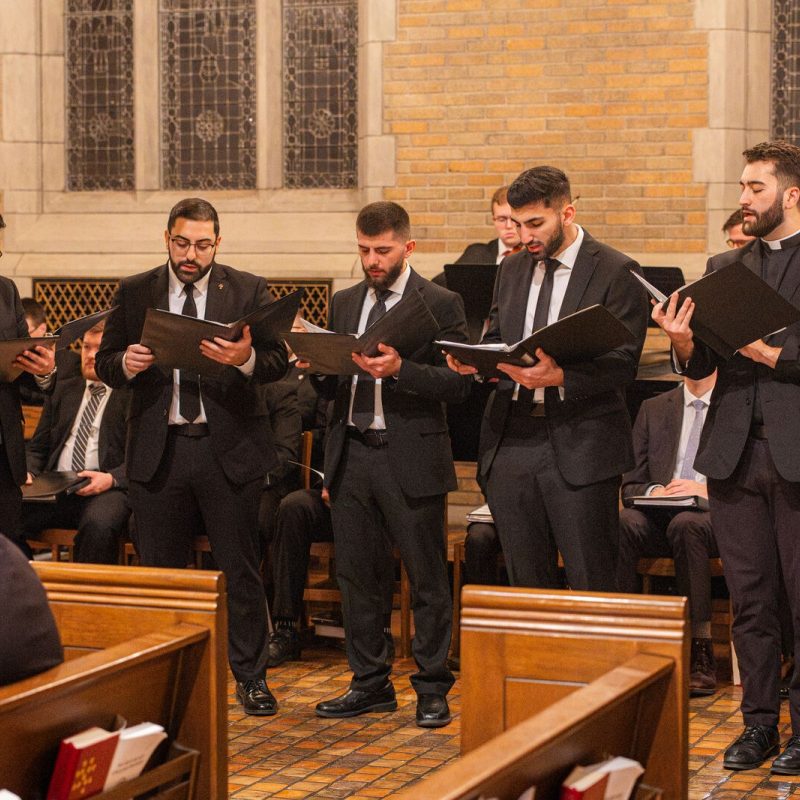
The Mass in the seminary’s chapel was nearly full, with seminarians singing sacred hymns and assisting during the liturgy.
Reflecting upon the readings from the Second Sunday of Advent, in which St. John the Baptist calls for a “baptism of repentance,” Cardinal Pizzaballa said the expectation of Advent mirrors the expectation of the Christian life.
“The period of Advent is a period of repentance,” Cardinal Pizzaballa said. “The first thing the prophet, John the Baptist, says is, ‘Repent, because the kingdom of God is at hand.’”
While Advent and Lent are both periods of repentance, Advent has a special character as a time of “gaze and expectation,” the cardinal added.
To live without expectations is “a very poor life,” the cardinal said. Instead, Christians are called to see the “signs of the presence of God” in the world around them, he said, especially in the sacraments, the liturgy and in the Scriptures.
“We have to purify our expectations,” Cardinal Pizzaballa said. “Two persons can see the same thing, but can interpret it in two different ways, because what they hold in their heart is different. We have to repent in order to see according to the will of God, to purify the intentions of our heart according to the thought of God, and not according to our human gaze.”
As the messiah, Jesus did not come to satisfy the expectations of the world, but to surpass them, Cardinal Pizzaballa said.
“We read in the Scriptures that John the Baptist is in prison before his death, and he sends his disciples to Jesus, asking, ‘Are you the one we are expecting, or should we expect someone else?’ These expectations about the messiah didn’t fit what Jesus did,” Cardinal Pizzaballa said. “He sat down with sinners, he talked with women, played with children — all things a master at the time shouldn’t have done.”
“But when John asks, ‘Are you the one?’ Jesus responds with the Word of God in the book of Isaiah, saying, ‘See, I am the one doing what the prophets talk about — not what you expect.’ So we also need to purify our expectations,” he said.
Such purification of heart is what keeps the tiny Christian community in Gaza vibrant and together despite horrendous suffering in the Holy Land, the cardinal continued.
“Our reality is terrible,” Cardinal Pizzaballa said. “But do we have just war, violence, conflict, or is there something else? It depends on what we have in our hearts.”
While war, famine and destruction are part of everyday life in Gaza, “there are also many occasions of life, love and encounter,” he continued. “We should be able to see also in these moments that Jesus and the word of God are present also there.”
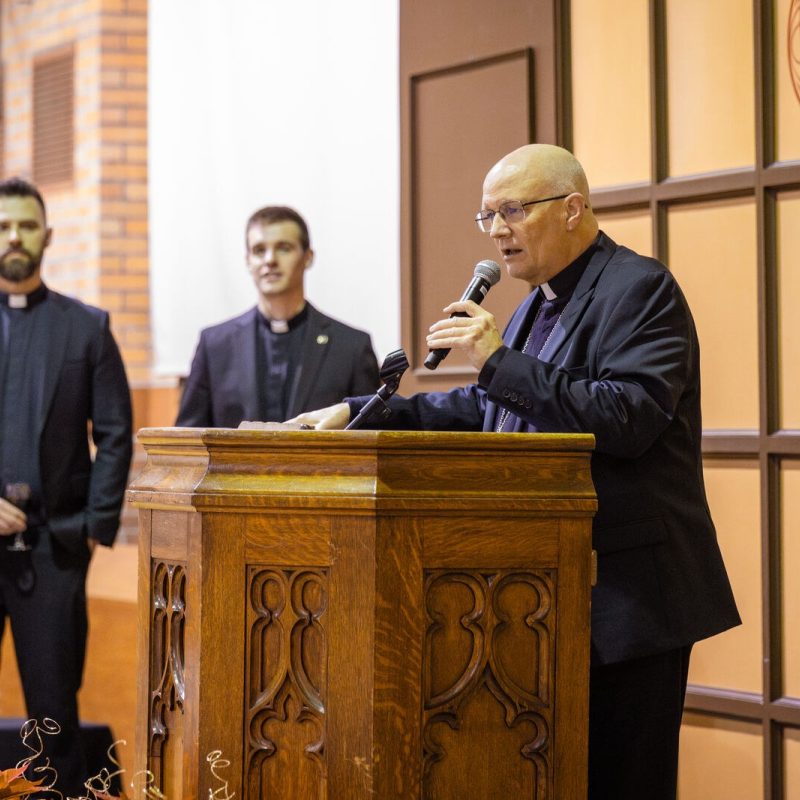
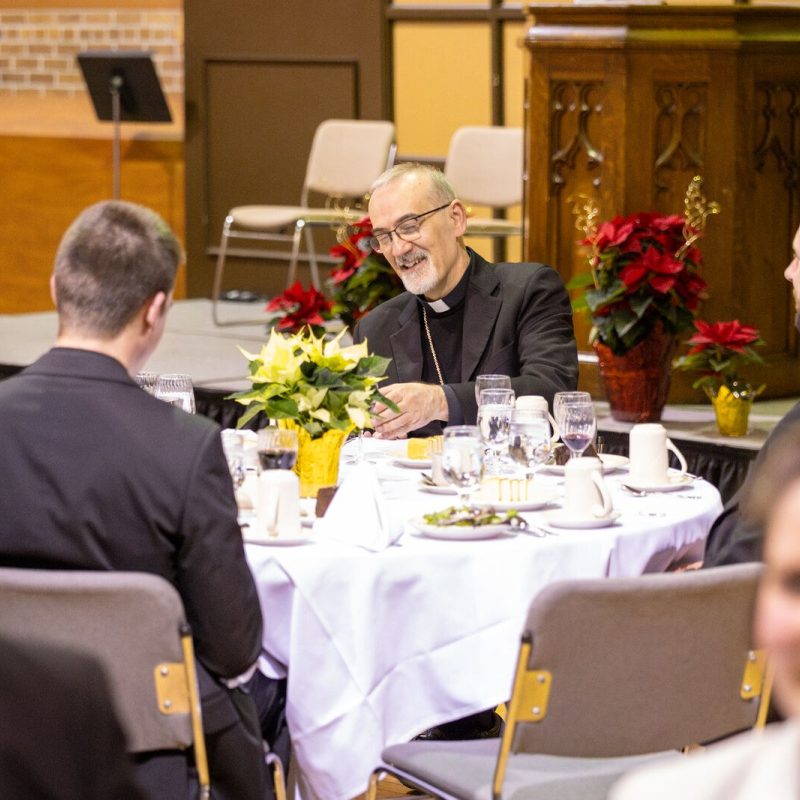
Speaking with Mosaic after Mass during a reception in the seminary’s gymnasium, seminarians and others said the patriarch’s visit to Sacred Heart is especially moving considering the seminary’s own deep connection to the Holy Land.
While the war has prevented pilgrimages in recent years, Sacred Heart’s Desert Formation Experience has historically sent seminarians to walk in the footsteps of Jesus in places like Bethlehem, Jerusalem and the Sea of Galilee. This year, seminarians traveled to holy sites in Europe instead.
Jake Rapanotti, a seminarian studying for the Archdiocese of Detroit, called the opportunity to meet with the patriarch “a really special evening for us.”
“For me and all the seminarians, the Holy Land is near and dear to our hearts,” said Rapanotti, a first-year configuration seminarian from St. Mary Parish in Royal Oak. “It’s normally a part of seminary formation for us to visit there, and so the violence and war that’s been happening there is a terrible thing to hear about.
“We view ourselves as one Church united across the world, and so if one member of the body is hurting, it hurts the rest of us,” Rapanotti continued. “For our brothers and sisters in the Holy Land to be suffering, innocent people being hurt, the rest of us suffer as well. But we know that our suffering can be redemptive, and that Christ is with us in our suffering.”
For Dr. André Villeneuve, associate professor of Old Testament and biblical languages at Sacred Heart, Cardinal Pizzaballa’s visit took on a personal meaning.
As a young man living in Israel in 2001, Dr. Villeneuve — then active in the messianic Judaism movement — met with then-Fr. Pizzaballa as he was seeking to learn more about the Catholic faith.
“I was living in Tel Aviv. I was on my way back into the Catholic Church, and I thought, ‘I need to speak to a priest because I have some questions about the Catholic faith,’” Dr. Villeneuve recalled. “I had heard about this Hebrew-speaking Catholic community, so I took a bus day trip to Jerusalem. I knocked on the door, and this Franciscan priest named Fr. Pierbattista opened the door.”
The two conversed about the Catholic faith in Hebrew, and “over the next several months, we stayed in correspondence, and eventually I made my way back to the Church,” Dr. Villeneuve said.
To see his former spiritual mentor again — this time as the leader of all Latin Catholics in the Holy Land — was a joyful blessing, Dr. Villeneuve said.
“He’s a humble man. He’s a very important and influential man, but you don’t get a sense of that when you speak with him,” Dr. Villeneuve said. “He carries the suffering of both the Israelis and the Palestinians, not trying to be partisan, but doing the best he can to be a force for good.”
Others in attendance for Cardinal Pizzaballa’s visit, such as Dominic Pizzo, reflected upon the patriarch’s peaceful words and actions as a sign of hope both for Detroiters and those in the Holy Land.
Pizzo, whose company, TriGriffin Group, has helped Sacred Heart Major Seminary with projects such as the new auditorium and parking structure, said Cardinal Pizzaballa’s presence is a reminder that even in darkness, Christ’s light shines brightly.
“There’s so much conflict, but he has such a calm manner about him,” Pizzo said. “We’re so blessed to have him here, and to help him out in any way that we can. We’re going to do everything we can to help and make sure his mission is accomplished.
“The Holy Land represents so many different faiths, and our faith is also there,” Pizzo added. “We need to make sure that is protected at all times, and with the blessing of God, that’s what he does. We’re blessed to have a man so devoted to the Holy Land and to our faith, and to keep protecting it the way he does.”